
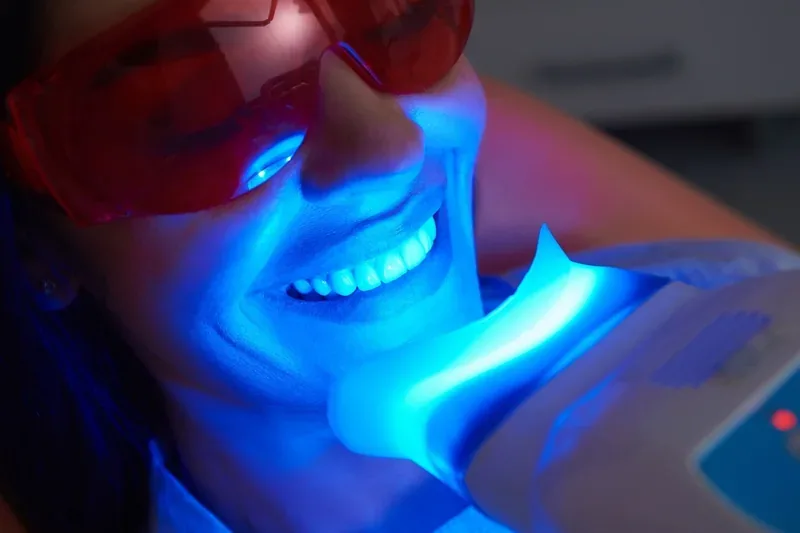
In my clinical examinations, one of the most common aesthetic requests I hear from my patients is to have whiter and brighter teeth. Our daily habits, aging, and genetic factors gradually affect the porous structure of tooth enamel, leading to discoloration. Teeth whitening (bleaching) is the process of dissolving organic and inorganic stain structures that have penetrated the enamel and dentin layers of the tooth with the help of special gels. Unlike whitening toothpastes sold on the market that work by mechanical abrasion, this procedure safely lightens the color by several shades through a completely chemical reaction, without scratching the tooth surface.
What Are the Teeth Whitening Methods?
In our clinical practice, we mainly apply two different whitening methods: office-type (in-clinic) and home-type whitening.
Office-type whitening is a fast and effective procedure performed under a dentist’s supervision and takes an average of 45-60 minutes. After completely isolating your gums with a special protective barrier, we apply a high-concentration whitening gel to the tooth surfaces and activate this gel with a special light source (laser or LED). In most cases, satisfactory results can be achieved in a single session.
For home whitening, we take our patient’s oral impressions and prepare custom-made transparent trays. The patient applies the lower-concentration gels we provide by squeezing them into these trays and uses them at home for the periods we determine (during nighttime sleep or 2-4 hours during the day). In most cases, I prefer the combined whitening protocol, in which we combine these two methods to achieve the most lasting and ideal result.
Is Teeth Whitening Harmful?
There is a common misconception in society that teeth whitening damages tooth enamel or weakens the teeth. When performed under a dentist’s supervision, with the right materials and the correct indication, whitening has no structural harm to the teeth. During the procedure or in the first few days afterward, temporary sensitivity to hot and cold is completely normal. This is physiological and subsides quickly with the fluoride applications or desensitizing toothpaste we recommend.
Who Is It Not Suitable For?
Teeth whitening can be safely applied to individuals whose tooth development is complete and whose gum health is good. However, we do not routinely apply this procedure to pregnant women, breastfeeding mothers, or patients under 18 years of age. In addition, one detail must be noted in patients with large fillings or porcelain veneers on their front teeth: whitening gel lightens color only on natural tooth tissue and has no effect on artificial materials. Therefore, to avoid color mismatch, any existing fillings and veneers should be planned for replacement after the procedure according to the new tooth shade.
How Long Does the Achieved Whiteness Last?
The longevity of the whiteness achieved after treatment depends largely on the patient’s eating habits and oral hygiene. Heavy consumption of stain-causing foods and beverages such as tea, coffee, red wine, and tomato paste, as well as smoking, accelerates teeth returning to their прежvious color over time. However, under ideal conditions and with regular brushing habits, the whitening effect lasts on average between 1 and 3 years. It should be remembered that abrasive products sold uncontrollably on the market can cause permanent damage to tooth enamel and burns on the gums. The only safe way to achieve a healthy smile is for the process to be planned by a dentist.