
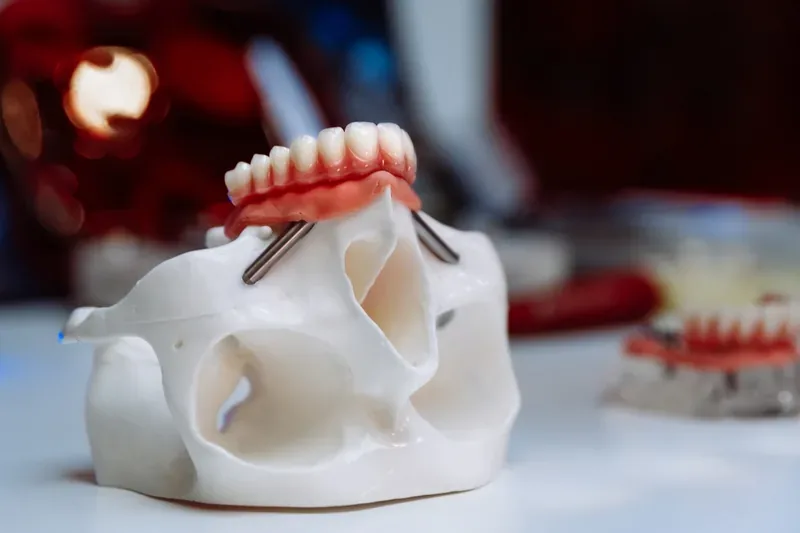
Oral and maxillofacial surgery is a specialty that addresses complex cases that cannot be resolved with standard dental treatments in our clinical practice and aims to preserve the health of the oral tissues and the maxillofacial region. When my patients hear the word "surgery," they often understandably feel anxious and afraid. However, with advancing medical technology, three-dimensional imaging systems, and modern anesthesia techniques, these procedures have become safe routine treatments in which patient comfort is maintained at the highest level.
In Which Cases Do We Refer to Maxillofacial Surgery?
The scope of maxillofacial surgery is not limited to tooth extraction; it covers a broad range involving both hard and soft tissues. The surgical procedures we most commonly perform in our clinic are:
Impacted or Complicated Tooth Extractions: Surgical removal of wisdom teeth that remain within the bone because there is no room for them in the jaw, or unerupted canines.
Advanced Implant Surgery and Bone Grafts: Increasing the volume of the jawbone by adding bone powder (graft) before implant placement in cases where the jawbone has resorbed or is insufficient (such as sinus lifting).
Cyst and Tumor Operations: Removing pathological formations (cysts) that silently grow in tooth roots or within the jawbone without damaging surrounding tissues.
Temporomandibular Joint (TMJ) Disorders: Medical and surgical treatment of mechanical problems such as clicking sounds from the jaw joint, limited mouth opening, or locking.
Do Impacted Wisdom Teeth Always Need to Be Removed?
This is one of the questions I most frequently encounter as a maxillofacial surgeon. If a wisdom tooth has fully erupted in the mouth, is in proper occlusion with the opposing tooth, and can be easily brushed, there is no need for extraction. However, teeth that remain partially impacted in the bone due to jaw narrowness cause repeatedly recurring infections in the surrounding gum (pericoronitis). Fully impacted teeth, on the other hand, can put pressure on the root of the healthy tooth in front of them, leading to root resorption or creating conditions for decay. In such risky situations, surgical extraction of the tooth is a necessity that should not be delayed for overall oral health.
Operative Process: Will I Feel Pain During the Procedure?
"Will it hurt during the surgery?" is a concern that almost all of my patients have. All maxillofacial surgery procedures are performed under local anesthesia, deep sedation, or, in specific cases, general anesthesia. Once the area is numbed, no incision or extraction performed on the bone or tooth causes pain. You only feel the mechanical pressure applied by the physician while separating the tissue. Because we work with minimally invasive surgical principles, which cause the least possible damage to the tissue, procedure times have also become considerably shorter.
Recovery After the Surgical Procedure
The success of the operation begins in the dentist's chair but is completed with your care at home. During the first 24 hours after the surgical procedure, applying cold compresses (ice) externally to the surgical site at intervals greatly helps prevent potential edema (swelling). For the first few days, hot, hard, and grainy foods should be avoided; smoking should definitely not be used in order not to disrupt tissue healing. If you take the prescribed antibiotics and analgesics regularly, the healing process will be extremely comfortable. A timely and proper surgical intervention prevents much greater bone loss and pain that may occur in the future.