
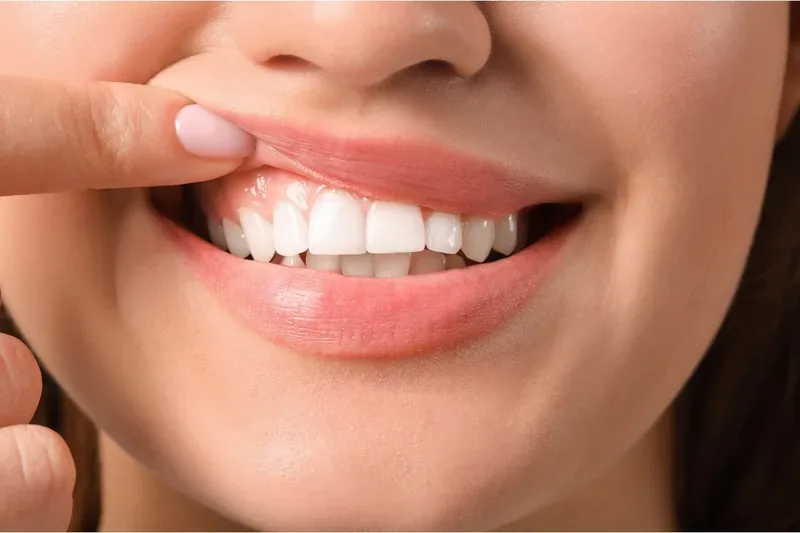
In my clinical practice, I often see that my patients usually come to me with cavities or aesthetic concerns, yet they frequently overlook gum problems, which progress much more insidiously. However, even if you have the healthiest, cavity-free teeth in the world, if the main structure holding those teeth in place—namely the gums and the surrounding bone tissue—is diseased, tooth loss is inevitable. Gum treatments, which we call periodontology in medical terms, aim to secure the foundation of oral health by eliminating inflammatory conditions in the soft and hard tissues surrounding the teeth.
How Do Gum Diseases Start and What Are the Symptoms?
At the root of everything is the sticky bacterial layer that accumulates on tooth surfaces, which we call "plaque." If this plaque is not removed with regular brushing, it combines with minerals in saliva, hardens, and forms calculus (tartar). Calculus serves as an excellent habitat for bacteria, triggering infection in the gums.
The question my patients ask me most often is: "Is bleeding while brushing normal?" As a physician, I can say clearly that healthy gums do not bleed at all. Bleeding is the first and most important cry of gingivitis. In addition;
Redness, swelling, and sensitivity in the gums,
Persistent bad breath,
Gum recession and exposed tooth roots,
In advanced stages, tooth mobility and spacing are the most noticeable symptoms.
How Does the Treatment Process Progress? Is It a Difficult Procedure?
The first and most fundamental step of gum treatment is scaling, that is, dental cleaning. Using special ultrasonic devices, we completely remove the hardened calculus and plaque on the surface without causing any damage to the tooth enamel. This procedure is generally extremely comfortable and short, often not even requiring anesthesia.
However, if the infection has penetrated deeper into the gums and reached the jawbone (the stage of periodontitis), we then proceed to a more detailed cleaning procedure called root planing (curettage). At this stage, because we completely numb the relevant area with local anesthesia, you feel no pain or soreness during the procedure. By entering the gum pockets with special instruments, we clean the inflamed tissues and remove bacteria from the tooth root. In much more advanced cases of bone loss, we can directly inspect and clean the area with minor surgical interventions (flap operations) and, if necessary, add bone graft material (graft).
What Should Be Considered During the Healing and Protection Phase?
Successful gum treatment is possible with half of the work done in the clinic by me and the other half with the care you will provide at home. A slight sensitivity to hot and cold in the teeth for the first few days after the cleaning procedure is a completely physiological healing process.
To prevent your gums from getting diseased again, it is essential to brush your teeth twice a day with a soft or medium-soft brush using a "sweeping" motion from the gums toward the teeth. Since brushing alone will not be enough to clean plaque from the spaces between teeth, the use of dental floss and interdental brushes is the most critical factor determining the success and permanence of the treatment. Gum diseases are silent and painless, insidious conditions; therefore, routine checkups with us every 6 months are our strongest protective shield, allowing us to resolve problems before they lead to bone loss.