
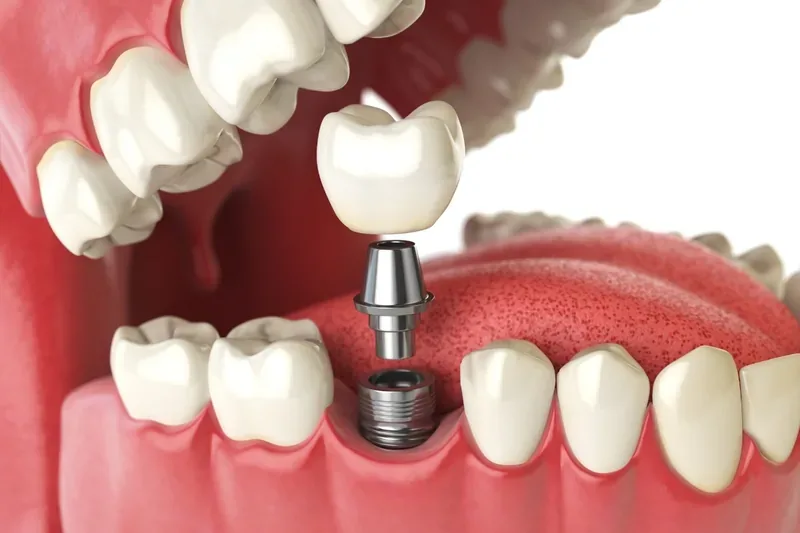
Missing teeth are not only an aesthetic concern; they are also a serious medical issue that directly affects chewing function, the jaw joint, and overall digestive health. One of the questions I hear most often from my patients in clinical practice is, "What is implant treatment, and is it suitable for me?" In simple medical terms, implant treatment is a restorative procedure consisting of tissue-friendly titanium screws placed into the jawbone in place of missing teeth, along with porcelain or zirconium tooth prostheses added on top of these screws. This system, which fully mimics the natural tooth root, is today accepted as the gold standard in replacing missing teeth.
How Does the Implant Treatment Process Work?
I usually divide the treatment process for my patients into two main phases: the surgical and prosthetic (tooth fabrication) stages.
In the surgical stage, titanium implants are placed under local anesthesia by creating millimeter-sized sockets in the jawbone. The procedure usually takes a short time, such as 15-20 minutes for a single implant. Afterwards, we wait for an average healing period of 2 to 4 months for the bone and the implant to fuse (osseointegration). During this time, the jawbone embraces the titanium screw as part of itself and provides lasting durability. Once healing is complete, impressions are taken and the most suitable superstructure, that is, the actual tooth, is placed according to the patient's facial and oral anatomy.
Who Is a Suitable Candidate for Implant Treatment?
We can safely apply this treatment to almost anyone whose bone development is complete (generally 18 years of age and over) and whose general health is good. Chronic conditions such as diabetes or hypertension do not constitute a definite obstacle to implants as long as they are kept under control with medication.
However, in cases where bone density is insufficient, we may first need to prepare the jaw for the implant by performing a bone graft (bone powder) procedure. In particular, heavy smoking and uncontrolled diabetes are the most important risk factors that reduce the success of implant fusion with bone and impair wound healing.
Does It Hurt During or After the Procedure?
The issue my patients worry about most when sitting in the dental chair is usually pain. However, with modern anesthesia techniques, implant placement is no different from a routine dental filling or extraction. You will definitely not feel any pain during the procedure; only a slight pressure may be felt in the area where the doctor is working. Mild soreness that may occur after the anesthesia wears off is easily managed with the routine painkillers we prescribe. A large part of my patients can comfortably return to their normal daily lives the next day after the operation.
How Long Do Implants Last?
Because implants are made from non-decaying titanium materials, they theoretically have the potential to remain in the mouth for life. However, as a physician, I must emphasize a very critical detail here: the implant itself does not decay, but the surrounding gum and jawbone can become diseased (peri-implantitis).
Just like your natural teeth, implants must also be meticulously cleaned daily with brushing, floss, and interdental brushes. This treatment, which offers the closest function and aesthetics to your own teeth, dramatically improves quality of life when combined with proper surgical planning and the patient's careful oral hygiene. Neglecting missing teeth will over time lead to bone loss in the jaw and shifting of adjacent teeth. Therefore, without wasting time, undergoing a detailed examination by a specialist physician with a three-dimensional tomography or panoramic X-ray is the most appropriate step you can take to protect your dental health.